The Pearl Encyclopedia
A comprehensive reference covering the major pearl types — their origins, characteristics, value factors and identification methods. Written and curated by the HIRCO laboratory.
Natural Pearls
History
Natural pearls have captivated human imagination for millennia. Among the oldest known gemstones, they were treasured by ancient civilizations across every continent — from the pearl divers of the Persian Gulf to the courts of imperial China and the empires of Rome. For most of recorded history, every pearl was natural, formed by chance within a living mollusk.
Origins
Natural pearls form when an irritant — typically a parasite, fragment of shell or organic material — enters the soft tissue of a mollusk. In response, the creature secretes layer upon layer of nacre around the foreign body, gradually forming a pearl over a period of years. This process is entirely organic and occurs without any human involvement.
Characteristics
Natural pearls are distinguished by their unique growth structures. Under X-ray examination, they typically display a concentric internal architecture without the visible nucleus present in most cultured pearls. Their shapes tend to be irregular or baroque, though perfectly round natural pearls exist and command extraordinary value.
Colour Range
Natural pearls occur in a wide spectrum of colours: white, cream, yellow, gold, pink, silver, blue and occasionally black. The colour is determined by the species of mollusk, the environment in which it lives and the minerals present in the surrounding water.
Lustre Characteristics
The lustre of a fine natural pearl is often described as having a depth and warmth that is immediately distinguishable from cultured counterparts. The nacre layers, deposited over many years, create a complex interplay of light that produces a soft, deep glow.
Value Factors
Size, shape, colour, lustre and surface quality are the primary determinants of value. However, the fundamental rarity of natural pearls — with estimates suggesting that only one in ten thousand oysters will produce a natural pearl of any quality — makes provenance and authentication the most critical factor of all.
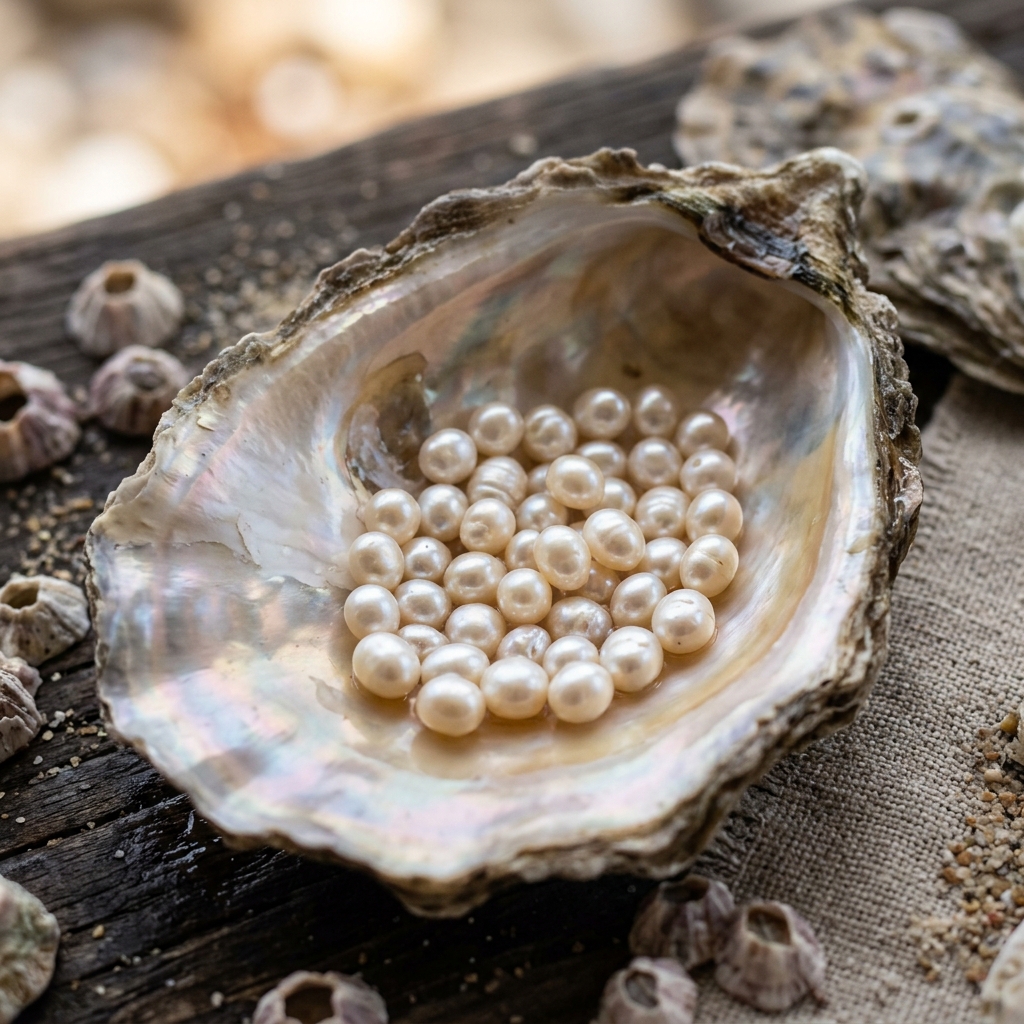
Specimen Image
Natural Pearls
Interesting Facts
- The oldest known pearl jewelry dates back approximately 4,500 years.
- Natural pearls were once so valuable they were reserved for royalty.
- The La Peregrina, a famous natural pearl, weighed over 55 carats.
- Most natural pearls today are found in older jewelry and estate collections.
Identification Notes
Distinguishing natural from cultured pearls requires specialized equipment. X-ray radiography can reveal the absence or presence of a nucleating bead. Microscopic examination of surface drill holes and growth structures provides additional evidence. These are examinations best conducted by an experienced, independent laboratory.
Cultured Pearls
History
The development of pearl culturing in the early 20th century transformed the pearl industry entirely. By the 1920s, Japanese pioneers had perfected techniques for producing round pearls with consistent quality, making pearls accessible to a wider market while preserving the natural beauty that had made them prized for centuries.
Origins
Cultured pearls are formed through a process that mirrors natural pearl formation, with one critical difference: the irritant is intentionally introduced by human hands. In bead-nucleated varieties, a small spherical bead is placed inside the mollusk, around which the creature deposits nacre. In tissue-nucleated varieties, a small piece of mantle tissue serves as the catalyst.
Characteristics
Cultured pearls share the same chemical composition and optical properties as natural pearls — both are composed of aragonite and conchiolin arranged in concentric layers. The distinction lies not in what the pearl is made of, but in how it began. X-ray examination typically reveals the nucleating structure within.
Colour Range
The colour range of cultured pearls is broad and varies by species. Akoya pearls are typically white or cream with pink or green overtones. South Sea pearls range from white to deep gold. Tahitian pearls offer an extraordinary spectrum from silver-grey to peacock green and virtually black.
Lustre Characteristics
Modern culturing techniques produce pearls with remarkable lustre. The quality and thickness of the nacre coating directly influence the depth and sharpness of reflection. Fine cultured pearls can display a mirror-like lustre that rivals their natural counterparts.
Value Factors
Nacre thickness, size, shape uniformity, surface cleanliness and colour are the primary grading criteria. Bead-nucleated cultured pearls tend to be larger and more round than tissue-nucleated varieties. The origin species and farming practices also significantly influence market value.
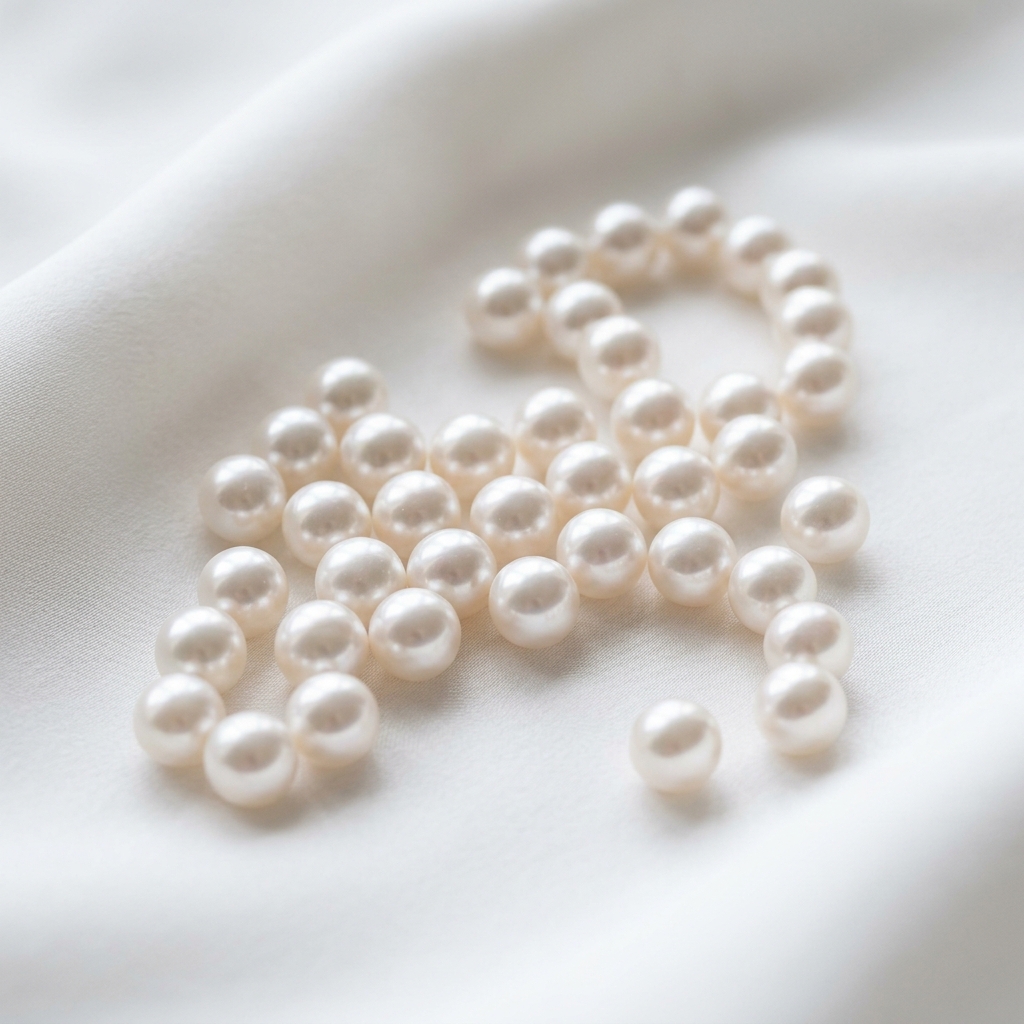
Specimen Image
Cultured Pearls
Interesting Facts
- Over 99% of pearls sold today are cultured.
- Kokichi Mikimoto is credited with perfecting commercial pearl culturing.
- Cultured pearls typically take 2-5 years to form.
- China is now the world's largest producer of cultured pearls.
Identification Notes
Cultured pearl identification relies on X-ray radiography to detect the nucleating bead or tissue structure. Microscopic examination of growth rings and surface characteristics provides additional evidence. Treatment detection — including bleaching, dyeing and coating — is an essential part of the authentication process.
Freshwater Pearls
History
China has a long history of freshwater pearl production, dating back centuries. However, it was the development of modern tissue-nucleation techniques in the late 20th century that transformed China's freshwater pearl industry into the largest single source of cultured pearls in the world.
Origins
Freshwater pearls are produced by freshwater mussels, primarily in the lakes and rivers of China. Unlike saltwater pearls, most freshwater pearls are tissue-nucleated rather than bead-nucleated, meaning a small piece of mantle tissue initiates pearl formation rather than a round bead.
Characteristics
Freshwater pearls are known for their wide variety of shapes — from near-round to potato, rice, button and baroque. Because they are primarily tissue-nucleated, a higher percentage of the pearl's volume is composed of solid nacre. Recent advances have produced larger, rounder freshwater pearls that increasingly rival saltwater varieties.
Colour Range
Natural freshwater pearl colours include white, cream, peach, lavender, pink and sometimes bronze or copper. Many freshwater pearls are also treated to enhance or modify their colour — practices that must be disclosed and, when possible, detected during authentication.
Lustre Characteristics
The lustre of freshwater pearls varies considerably. The finest specimens display a warm, soft glow, though the metallic sharpness found in top-grade Akoya pearls is less common. Nacre quality and thickness are the key determinants of lustre in freshwater varieties.
Value Factors
Size, shape, colour, lustre and surface quality determine value. Round and near-round freshwater pearls command a premium. Unusual colours — particularly strong lavender or natural peach — can increase desirability. Treatment status significantly affects market value.
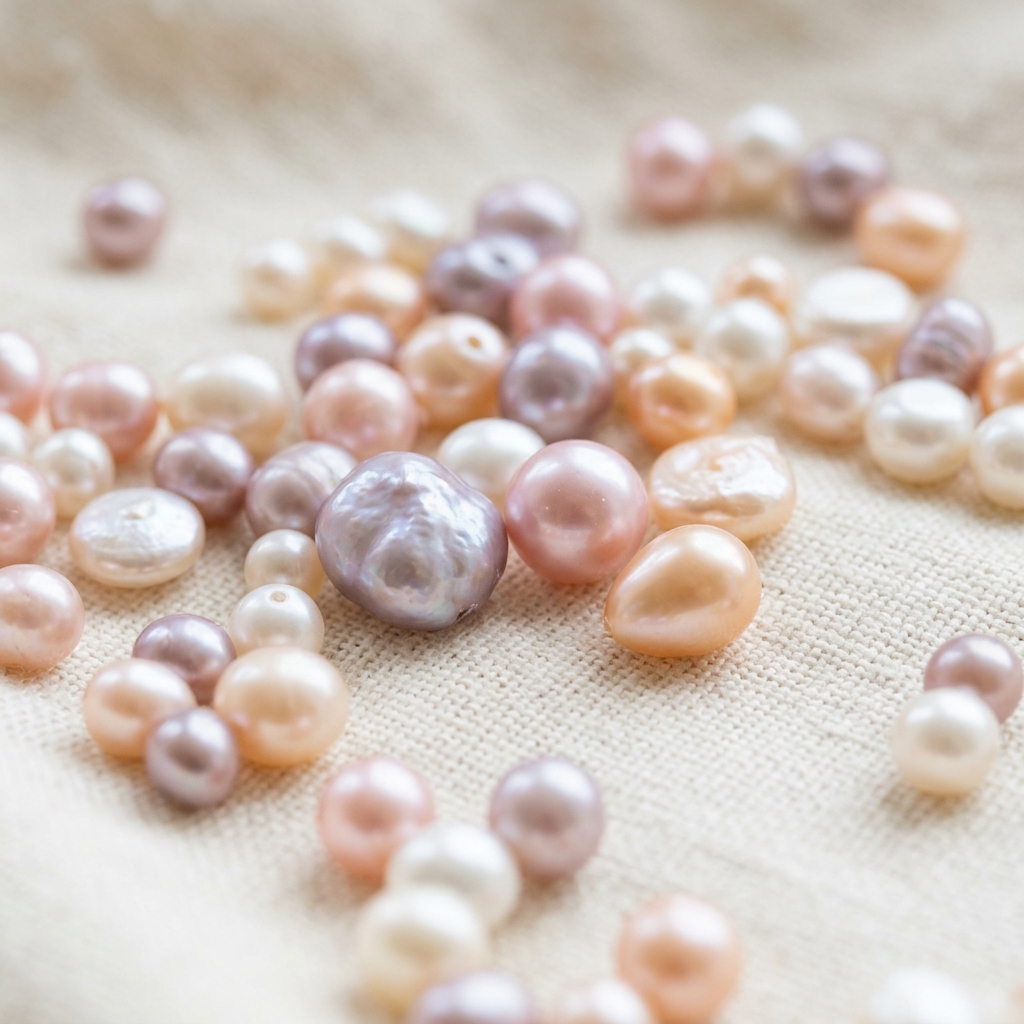
Specimen Image
Freshwater Pearls
Interesting Facts
- A single freshwater mussel can produce dozens of pearls at once.
- China produces over 90% of the world's freshwater pearls.
- Modern freshwater pearls can reach sizes exceeding 15mm.
- Edison and Kasumi are premium freshwater pearl varieties.
Identification Notes
Freshwater pearl identification involves distinguishing tissue-nucleated from bead-nucleated structures, assessing treatment status and evaluating quality characteristics. Microscopic examination of drill holes and surface patterns is particularly informative for freshwater pearl authentication.
Akoya Pearls
History
Akoya pearl cultivation originated in Japan in the early 1900s and became the global standard for the classic round white pearl. For most of the 20th century, the name 'Akoya' was synonymous with cultured pearls themselves — a testament to the dominance of Japanese production in the international market.
Origins
Akoya pearls are produced by the Pinctada fucata martensii oyster, primarily in the waters of Japan and, increasingly, China. These relatively small oysters are bead-nucleated, typically with a small round bead, and produce pearls known for their consistently round shape and high lustre.
Characteristics
Akoya pearls are prized for their roundness, strong lustre and smooth surfaces. They are typically smaller than South Sea or Tahitian varieties, with most ranging from 5mm to 9mm. Their bead-nucleated structure contributes to their symmetrical shape and consistent sizing.
Colour Range
The classic Akoya colour is white with rose or cream overtones, though they also occur in blue-grey, silver, yellow and gold. Treated blue and black Akoya pearls are also available — a distinction that must be identified and disclosed during professional examination.
Lustre Characteristics
Akoya pearls are renowned for their sharp, mirror-like lustre — often considered the finest among all cultured pearl varieties. This intensity of reflection is partly due to the relatively thin but tightly compacted nacre layers characteristic of Akoya cultivation.
Value Factors
Roundness, lustre intensity, body colour and overtone colour are the most important factors. Hanadama grade represents the highest quality classification in the Akoya market. Size above 8mm commands a significant premium due to the rarity of larger Akoya specimens.
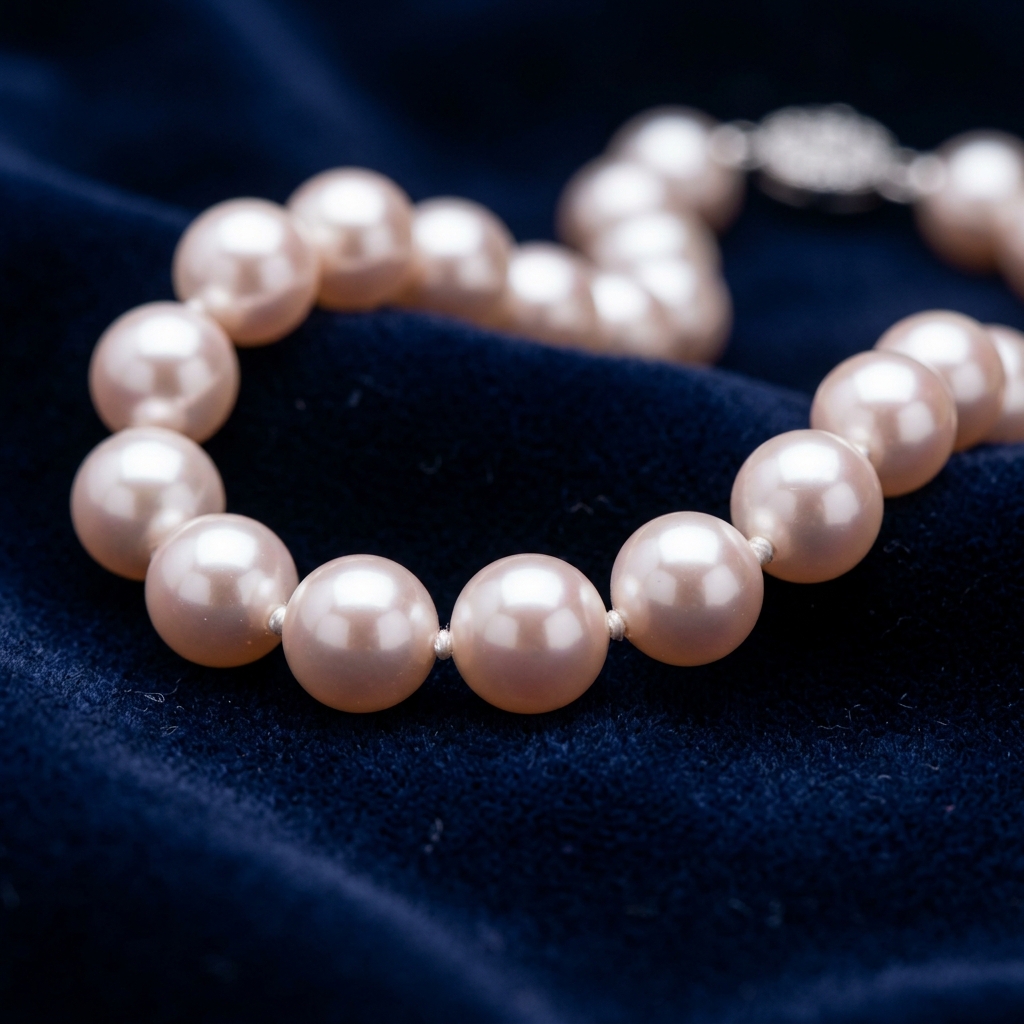
Specimen Image
Akoya Pearls
Interesting Facts
- Akoya pearls typically range from 5mm to 9mm in diameter.
- Hanadama is the highest quality designation for Akoya pearls.
- Japan and China are the primary Akoya producing nations.
- Akoya pearls were the first successfully cultured round pearls.
Identification Notes
Akoya pearl authentication involves verifying the bead-nucleated structure, assessing treatment status (particularly for non-white colours) and evaluating quality against Akoya-specific grading criteria. X-ray examination clearly reveals the nucleating bead characteristic of Akoya production.
South Sea Pearls
History
South Sea pearl cultivation developed in the mid-20th century, building on earlier attempts to culture the large Pinctada maxima oyster. Australia, Indonesia, the Philippines and Myanmar are the primary producing nations, with Australia recognized for the finest white South Sea pearls.
Origins
South Sea pearls are produced by the Pinctada maxima oyster — the largest pearl-producing mollusk in the world. This species is found in the warm waters of the South Pacific and Indian Oceans. The oyster's large size allows for a substantial nucleating bead, resulting in pearls of exceptional size.
Characteristics
South Sea pearls are distinguished by their large size (typically 10mm to 20mm, with occasional specimens exceeding 20mm), thick nacre and soft, satiny lustre. They are bead-nucleated, though the thick nacre coating often exceeds 3mm — a greater nacre depth than most other cultured pearl varieties.
Colour Range
Australian South Sea pearls are predominantly white with silver or rose overtones. Indonesian and Philippine varieties tend toward golden, cream and champagne tones. Deep gold South Sea pearls from the Philippines are among the most valuable of all cultured pearls.
Lustre Characteristics
South Sea pearls possess a distinctive soft, satiny lustre that is different in character from the sharp mirror-like reflection of Akoya pearls. This warm, deep glow is a result of the thick, gradually deposited nacre layers and is considered one of the hallmarks of fine South Sea quality.
Value Factors
Size is the single most significant value factor — larger specimens command dramatically higher prices. Colour (with deep gold being the most valuable), lustre, shape and surface quality complete the assessment. Clean, round, large South Sea pearls with deep golden colour represent the pinnacle of cultured pearl value.
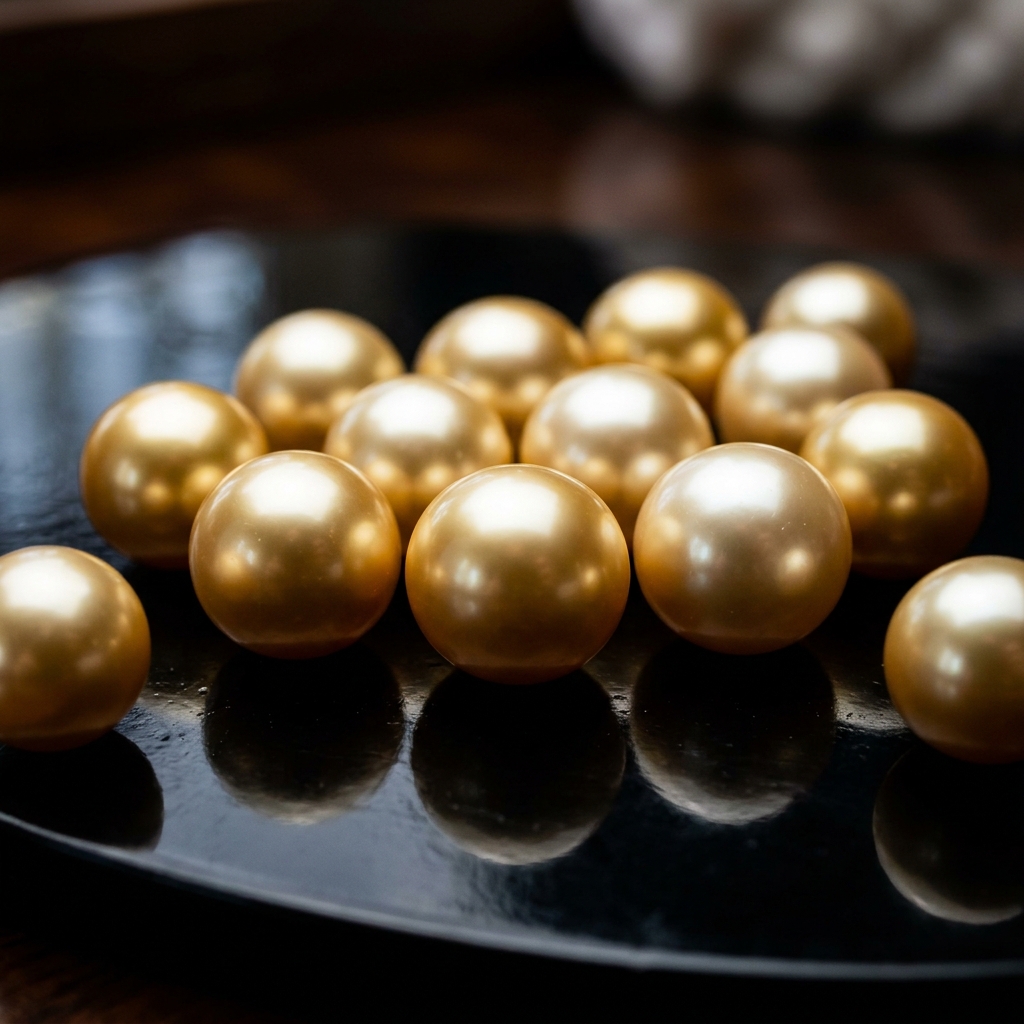
Specimen Image
South Sea Pearls
Interesting Facts
- South Sea pearls are the largest commercially produced cultured pearls.
- The Pinctada maxima oyster can grow up to 30cm in diameter.
- Nacre thickness can exceed 4mm in premium specimens.
- A single South Sea oyster produces only one pearl at a time.
Identification Notes
South Sea pearl authentication focuses on verifying the large-bead nucleation, assessing nacre thickness and quality, identifying treatment status and determining geographic origin. Spectroscopic analysis can help distinguish between Australian, Indonesian and Philippine production.
Tahitian Pearls
History
Tahitian pearl cultivation began in French Polynesia in the 1960s and has since become one of the most distinctive and sought-after pearl varieties in the world. Despite the name, Tahitian pearls are produced throughout the islands of French Polynesia, not solely in Tahiti itself.
Origins
Tahitian pearls are produced by the Pinctada margaritifera cumingii oyster, commonly known as the black-lipped oyster, found in the lagoons of French Polynesia. This species naturally produces dark-coloured nacre, resulting in pearls with an extraordinary range of dark and colourful overtones.
Characteristics
Tahitian pearls are notable for their size (typically 8mm to 16mm), dark body colour and remarkable overtone play. They are bead-nucleated and typically display a thick nacre coating. Their shapes range from round to baroque, with circled pearls being particularly characteristic of Tahitian production.
Colour Range
Despite being called 'black pearls,' genuine Tahitian pearls are rarely pure black. They display a rich spectrum of colours including dark grey, charcoal, silver, pewter, green, blue, bronze and peacock — a distinctive combination of green and pink overtones that is particularly prized.
Lustre Characteristics
Fine Tahitian pearls exhibit a rich, metallic lustre that gives their dark surfaces an almost reflective quality. The interplay between the dark body colour and vibrant overtones creates a visual complexity that is unique among cultured pearl varieties.
Value Factors
Colour is the most distinctive value factor — the peacock overtone, followed by aubergine and pistachio, commands the highest premiums. Size, roundness, lustre intensity and surface quality also contribute significantly. True round specimens with strong overtone colours are exceptionally rare and valuable.
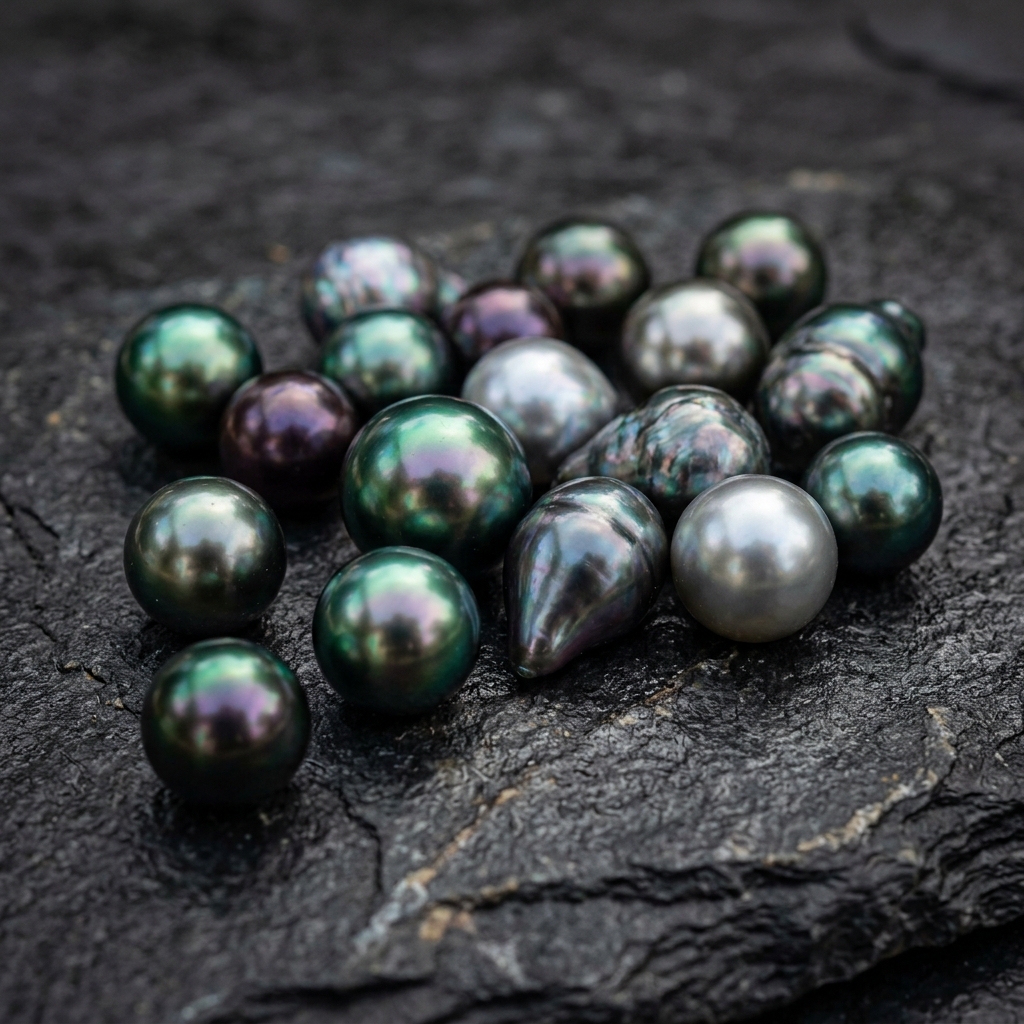
Specimen Image
Tahitian Pearls
Interesting Facts
- Tahitian pearls are the only naturally dark cultured pearls.
- 'Peacock' is the most sought-after Tahitian pearl colour.
- The Pinctada margaritifera can produce pearls up to 20mm.
- French Polynesia strictly regulates the export of Tahitian pearls.
Identification Notes
Tahitian pearl authentication involves verifying the Pinctada margaritifera species origin, assessing natural versus treated colour, evaluating nacre quality and distinguishing genuine Tahitian pearls from dyed freshwater or treated alternatives. Spectroscopic analysis is particularly valuable for colour verification.
Keshi Pearls
History
Keshi pearls occupy a unique position in the pearl world. The term 'keshi' is derived from the Japanese word for 'poppy seed' — a reference to the typically small size of these pearls. They were historically considered a byproduct of the culturing process, though their distinctive beauty has earned them a dedicated following.
Origins
Keshi pearls form when the oyster rejects or expels the implanted nucleus but retains the mantle tissue graft, which then stimulates nacre secretion around the remaining tissue fragment. The result is a pearl composed entirely of nacre with no internal bead. They occur in both saltwater and freshwater environments.
Characteristics
Keshi pearls are 100% nacre — among the most solid and durable of all pearl types. They tend to be irregular in shape, with high lustre and strong orient (the rainbow-like play of colour over the surface). Their lack of a nucleus means their shapes are unpredictable and often artistically appealing.
Colour Range
Keshi pearl colours reflect the species that produced them. Akoya keshi tend to be white or cream. South Sea keshi range from white to gold. Tahitian keshi display the characteristic dark colours and overtones of the Pinctada margaritifera species. Freshwater keshi occur in a broad range of natural and treated colours.
Lustre Characteristics
Because keshi pearls are composed entirely of solid nacre without a bead core, they often display exceptional lustre and orient. The pure nacre structure allows light to interact with the pearl's surface in ways that produce a depth and iridescence that is particularly striking.
Value Factors
Size, lustre, orient and colour intensity are the primary value determinants. Because keshi pearls are entirely nacre and cannot be precisely cultivated, their shapes are inherently irregular. Fine specimens with strong orient and appealing shapes are valued by designers and collectors alike.
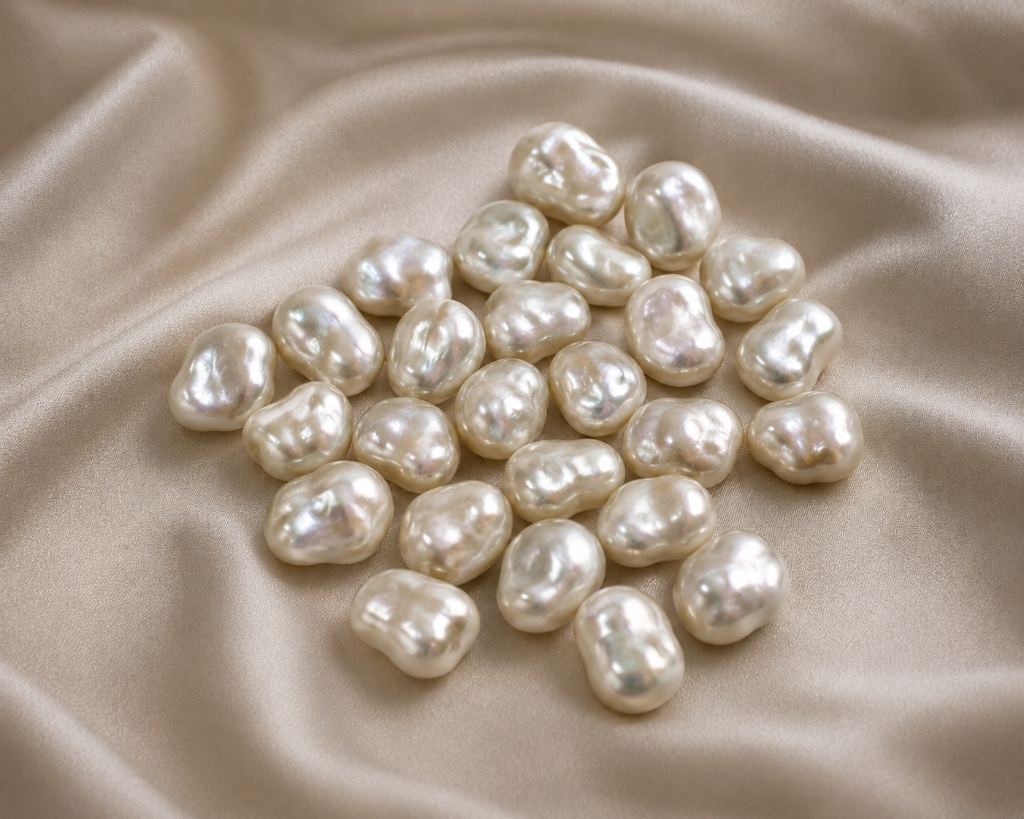
Specimen Image
Keshi Pearls
Interesting Facts
- Keshi pearls are composed of 100% solid nacre.
- They were once considered a 'byproduct' of pearl cultivation.
- Saltwater keshi are increasingly rare due to improved culturing techniques.
- Keshi pearls cannot be precisely replicated in shape or size.
Identification Notes
Keshi pearl identification involves confirming the absence of a bead nucleus through X-ray examination, identifying the parent species through morphological analysis and distinguishing genuine keshi from non-nucleated freshwater pearls. Their solid nacre structure is clearly visible under radiographic examination.
Baroque Pearls
History
Throughout most of pearl history, baroque pearls — those with irregular, non-spherical shapes — were more common than round ones. Rather than being considered inferior, they were celebrated by artisans and goldsmiths who transformed their unusual forms into extraordinary works of art, from Renaissance pendants to Mughal ornaments.
Origins
Baroque pearls can be either natural or cultured, and occur in virtually every pearl-producing species. The term refers not to a specific type of pearl but to any pearl whose shape deviates significantly from the round or symmetrical ideal. They form when the nacre deposition process is affected by irregularities in the nucleating structure or the mollusk's mantle.
Characteristics
Baroque pearls are defined by their asymmetry and irregular shapes. They may be teardrop-shaped, pear-shaped, elongated, pinched, folded or completely freeform. Despite — or because of — their irregular shapes, baroque pearls often display exceptional lustre and orient, as the varied surface angles interact with light in complex ways.
Colour Range
Baroque pearls occur in the full colour range of their parent species. A single baroque pearl may display multiple colours or strong overtone patterns across its irregular surface, creating visual complexity that round pearls rarely achieve.
Lustre Characteristics
The varied surface geometry of baroque pearls often produces remarkable lustre and orient effects. Areas of concentrated curvature can display intense, mirror-like reflections, while flatter zones may show a softer, broader glow. This interplay is one of the qualities that makes baroque pearls particularly appealing to designers and collectors.
Value Factors
While roundness is not a factor, aesthetic appeal, surface quality, lustre, colour and size are significant. The most valuable baroque pearls are those with particularly appealing or unusual shapes, strong lustre and orient, and interesting colour characteristics. Designer pieces set with fine baroque pearls can command substantial premiums.
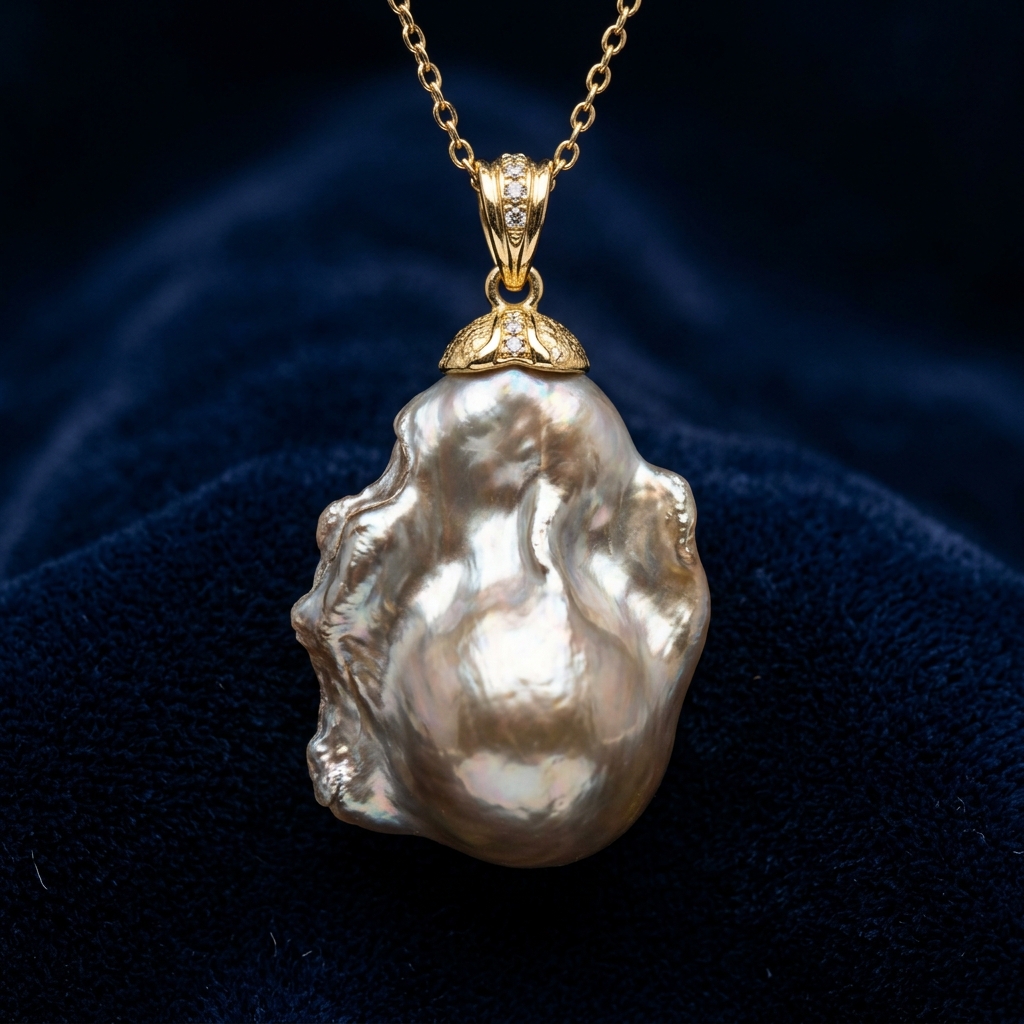
Specimen Image
Baroque Pearls
Interesting Facts
- Many famous historic pearls are baroque, not round.
- Baroque pearls have been used in art jewelry for centuries.
- The irregular shape often produces exceptional orient effects.
- Modern designers increasingly seek fine baroque specimens.
Identification Notes
Baroque pearl authentication follows the same scientific process as round pearl examination — identifying natural versus cultured origin, species determination, treatment detection and quality assessment. Their irregular shape does not diminish the need for or value of professional authentication.
Have a Pearl That Requires Identification?
Our laboratory provides authoritative authentication for all pearl types. Whether you require confirmation of species, detection of treatments or a complete certification, our GIA-certified gemologist is prepared to assist.